

Heritage in Resistance
From Timbuktu to Odesa
From Timbuktu to Odesa, from Bamiyan to Gaza, armed conflicts make heritage a prime target. In the face of these destructions, the exhibition Heritage in Resistance examines acts of erasure, as well as the forms of resistance and repair that make it possible to envision the future from the ruins.

Temple de Bêl, images d’archives projetées sur une reconstitution après destruction, Palmyre, Syrie. Extrait d'un film Iconem
In 2012, the destruction of the mausoleums of Timbuktu, listed as UNESCO World Heritage sites, marked a historic turning point: for the first time, the deliberate annihilation of cultural monuments was classified as a war crime by the International Criminal Court. An unprecedented international mobilization then began to rebuild the destroyed sites, drawing on archaeological excavations and the memory of Malian artisans.
While war has always brought destruction, the beginning of the 21st century reveals an intensification and a systematization of attacks on cultural and natural heritage. The exhibition sheds light on this contemporary reality and raises an essential question: how does war reveal what is irretrievably lost, while at the same time bringing forth acts of resistance that make future repair possible?
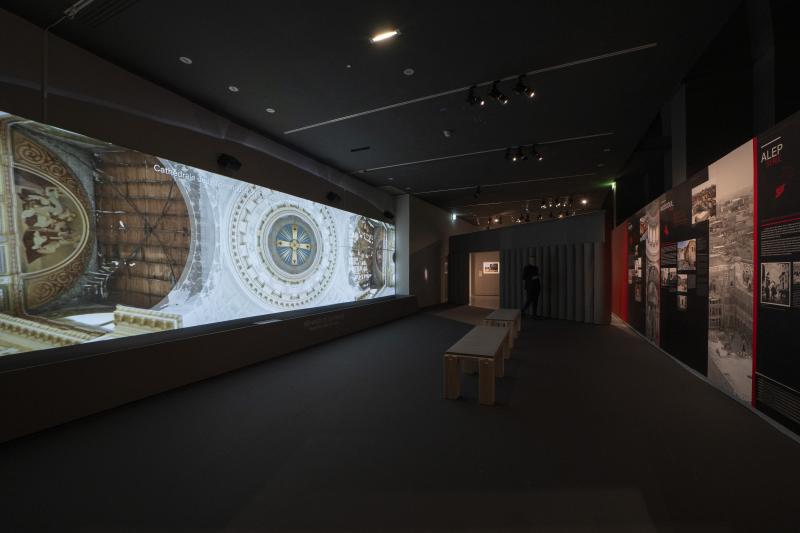
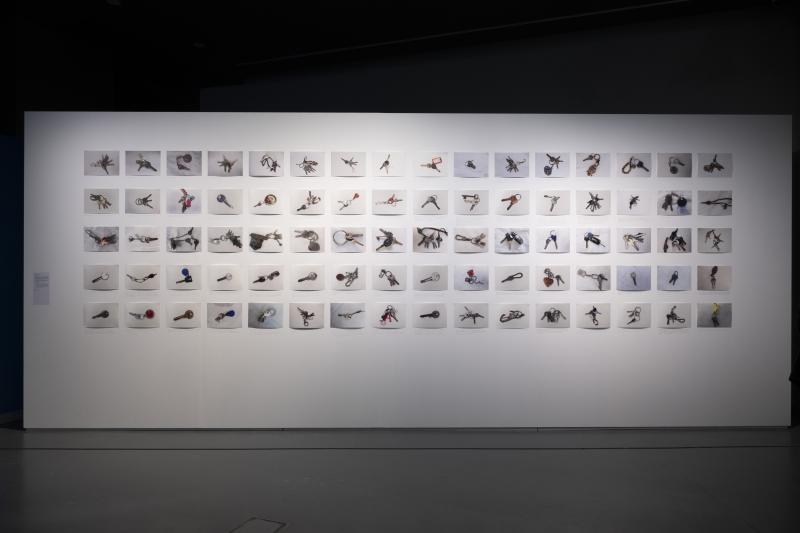
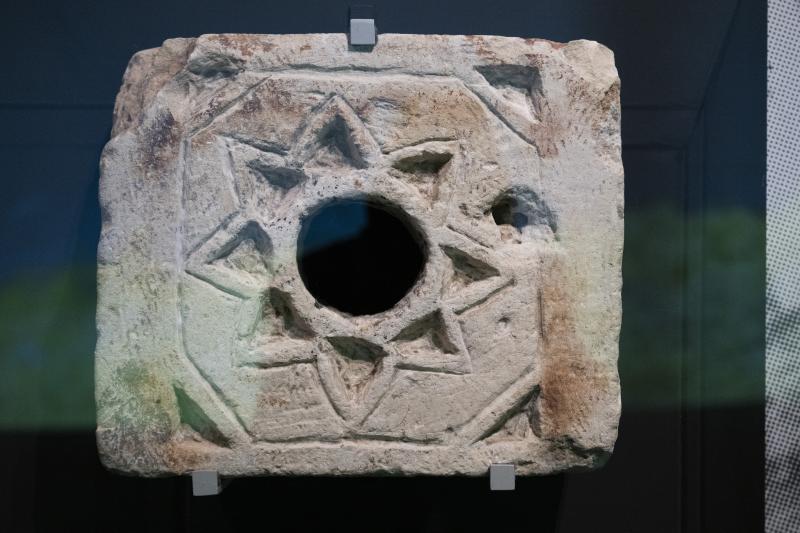
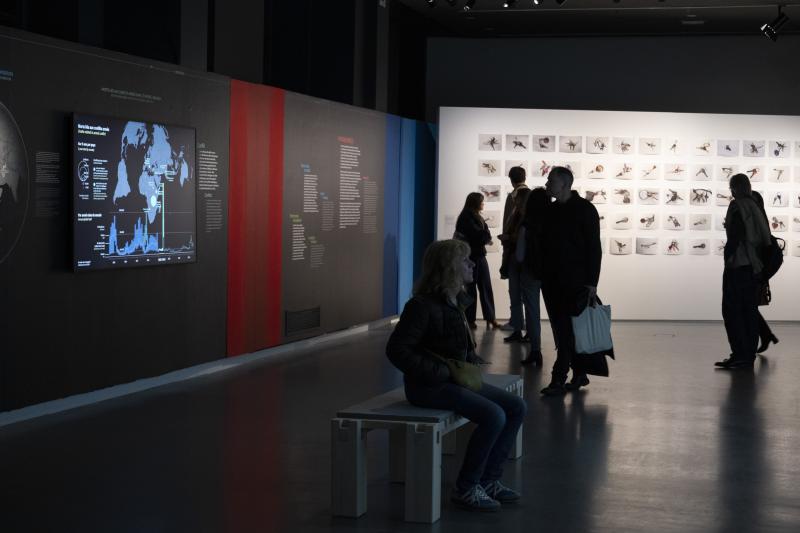
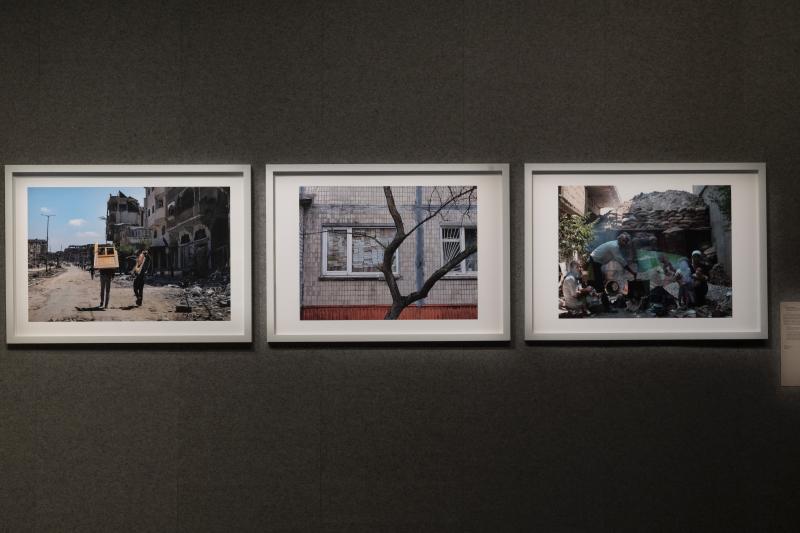
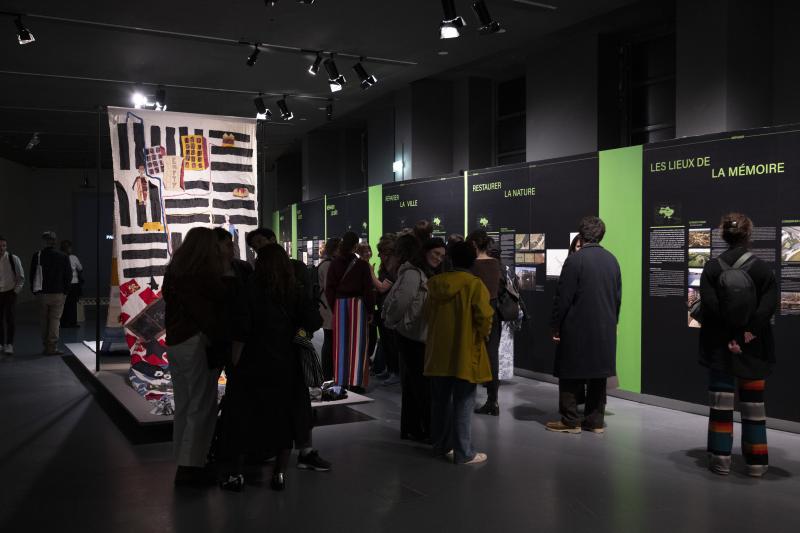
Through a remarkable ensemble of maps, texts, models, photographs, videos, contemporary artworks, and digital replicas produced by Iconem, the exhibition offers a journey in three sequences. Conceived as a major report, it weaves a documented, visual, and sensitive narrative, bringing together the perspectives of architects, artists, researchers, field actors, and witnesses.
Sequences of the Exhibition
Erasing
Today, the destruction of heritage takes multiple forms: the dynamiting of emblematic sites, the massive bombardment of cities, the deliberate abandonment of territories, the looting and trafficking of cultural property. This erasure also affects ordinary and intangible heritage through population displacement, “cultural cleansing,” urbicide, ruricide, and ecocide. Far from the image of a “clean” war, these practices reveal the extent of the violence inflicted on places and societies.
Resisting
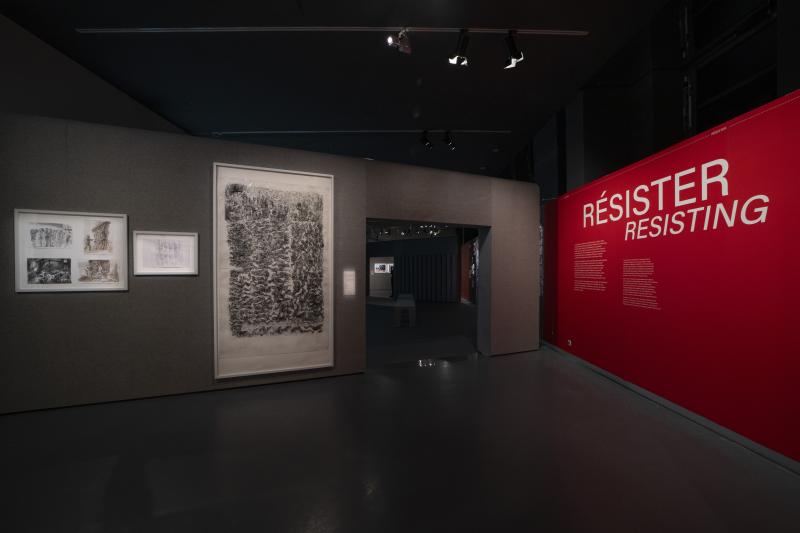
In the face of erasure, forms of resistance emerge. Alongside major international institutions, NGOs, associations, citizen groups, architects, and researchers work to protect, document, and transmit endangered heritage. In conflict zones, every everyday gesture, every story, becomes an act of resistance, helping to preserve memory and support the physical and psychological survival of populations.
Restoring
In the 21st century, post-conflict repair goes beyond material reconstruction alone. It involves a holistic approach attentive to territories, bodies, and minds. To repair is also to “rebuild society,” to restore bonds, transmit knowledge, and place memory at the heart of processes of renewal. Heritage thus becomes an essential lever for imagining a shared future, in continuity with the past and with the living world.
This exhibition deals with conflict zones and contains material that may be distressing to sensitive viewers and children under the age of 12.

With the support of :

Program and public events related to the exhibition “Heritage in Resistance: From Timbuktu to Odessa”
The screenings, lectures, and panel discussions organized at the Cité in conjunction with the exhibition “Heritage in Resistance” aim to foster dialogue and a diversity of perspectives. The opinions expressed on these occasions are the sole responsibility of their authors and should not be interpreted as reflecting the position of the Cité or its partners.
DISCUSSIONS
Auditorium of the Cité, 7pm
Thursday 24 September: "Working with: post-conflict repairs" (in English)
Faced with the destruction caused by war, how can we successfully advocate for repairs that are mindful of cultural and natural heritage, respectful of local know-how, and preserve social ties ?
With: Alessandra Gola and AbdalRahman M Kittana, Yalla project (Tempere); Howayda Al-Harithy (Beirut), Oleh Drozdov (Lviv) Moderated by Elisabeth Essaïan, co-curator of the exhibition
Monday 19 October: "Documenting, cataloguing, mapping: sources under scrutiny"
How, and using which sources, methods and techniques, can we document the nature and extent of the destruction? To what extent do visual representations help raise awareness of this and contribute to the protection and restoration of heritage?
With: Yves Ubelmann (Iconem, Paris), Benoit Martin (Sciences Po, Paris), Martin Duplantier (Paris), Sipana Tchakerian (Inha, Paris) Moderated by Elisabeth Essaïan and Mathilde Leloup
Friday 6 November : “Teaching, Transmitting: the pedagogy of architecture in times of war”
Closing session of the conference, ‘Geopolitical Conflicts in Schools of Architecture’, with ENSA Paris-Malaquais
Where conflicts erupt, schools adapt. Education adapts, relocates, disappears or is reborn under the pressure of history. Three guests reflect on these episodes to discuss teaching methods and educational frameworks in cities under strain.
With: Myriam Radhouane (Geneva); Amra Hadzimuhamedovic (Sarajevo), René Elter (Intiqal, Paris), Moderated by Stéphanie Dadour and Mazen Haïdar
Thursday 26 November : "War as seen by artists"
From the immediacy of the event to the passage of history, at what point does an artist draw upon facts – such as their own experience of war – to create a work? Whether in the immediate moment or in retrospect, does the need to create arise as much to resist oblivion as to foster a kind of resilience ?
With: Emeric Lhuisset (Paris), Najah Albukaï (Paris), Kateryna Lisovenko (Vienna), Eraste Muthangi (Democratic Republic of the Congo). Moderated by Anne-Charlotte Depincé, artist and senior lecturer at ENSA Paris-Belleville
TALKS
Auditorium of the Cité, 7pm
Monday 5 October with Iryna Matsevko, historian and rector of the Kharkiv School of Architecture, Lviv
FILM
Auditorium of the Cité, 7pm
A programme curated by Hervé Bougon, programmer for the War on Screen festival in Châlons-en-Champagne and co-founder of the Close-up Festival, in collaboration with the exhibition’s curators.
Friday 18 September : No Other Land
Directed by Basel Adra, Hamdan Ballal, Yuval Abraham, Palestine, Norway, 1h35, L’atelier Distribution
Basel Adra, a Palestinian activist in the West Bank, films the expulsion of his community by the Israeli occupation and meets Yuval, an Israeli journalist, who supports him in his efforts. An unexpected friendship blossoms.
Friday 16 October : Do you love me
Directed by Lana Daher, Lebanon, France, Germany, Qatar, 2025, 1h15, Les films de Force Majeur, Lightbox
A love letter to Beirut that explores the Lebanese collective psyche, marked by joy and intimacy, destruction and loss. The film reconstructs the fragmented history of a country without national archives, celebrating creation as a means of preserving memory.
Guests : Lana Daher, director. Lina Ghotmeh, architect (subject to confirmation)
Friday 11 December : Kosmina, trois fois
A work-in-progress film by Maxime Faure, featuring Bögdana Kosmina. France, Kepler22
As her country’s memory is threatened by war, Bögdana’s mission becomes clear: to shelter from the bombings everything she can save and bring to the world’s attention. From Paris to Vienna, from Kyiv to Venice, Bögdana travels across Europe, and at each new stage comes to terms with her own place in the world.
Guests : Bogdana Kosmina, architect, and Maxime Faure, director.
Bogdana Kosmina is an architect and curator of the Ukrainian pavilion at the Venice Biennale in 2025.
Special screenings
War on Screen Festival, October 2026, in Châlons-en-Champagne
Close-up Festival, Île-de-France, November 2026, at the Cité auditorium
WORKSHOP
28–30 October: Model-making workshop for 11–14-year-olds on the theme of "repairing/rebuilding"
Held within the permanent collections, in conjunction with the exhibition.
MASTER CLASS
From wednesday 26 August to Friday 4 September 2026 : "Towards a memorial to lost heritage"
In conjunction with the exhibition “Heritage in Resistance”, participants will design a temporary, demountable memorial dedicated to heritage destroyed by a contemporary conflict, symbolically situated on the Parvis des Droits-de-l’Homme at the Trocadéro.
Led by architect Bita Azimi, the Faber studio, photographer Giame Meloni and curators Elisabeth Essaïan and Mathilde Leloup, this workshop offers a transdisciplinary approach combining research, design and storytelling. It explores the role of architecture in the transmission of memory and symbolic reparation. A lecture by Marc Barani and the participation of Philippe Prost on the jury round off this experience.
CATALOGUE
The exhibition catalogue expands upon and enriches the content presented.
MAGAZINE
Archiscopie, "Guerre et paysage", no. 43, may 2026, on sale at the Cité bookshop.
Programme et rendez-vous publics autour de l'exposition Patrimoines en résistance, de Tombouctou à Odessa
Les projections, conférences et tables rondes organisées à la Cité autour de l’exposition «Patrimoines en résistance » visent à favoriser les échanges et la pluralité des points de vue. Les opinions exprimées à cette occasion le sont sous la seule responsabilité de leurs auteurs et ne sauraient être interprétées comme reflétant la position de la Cité ou de ses partenaires.
VISITES
Des visites guidées de l’exposition sont organisées à partir du 31 mai puis toutes les deux semaines ainsi que des rencontre relais du champ social/ handicap : 27 mai, 10 juin, 23 septembre
Pour les publics individuels, un document d’aide à la visite en français et anglais, un Kit sensoriel pour une expérience de visite apaisée et un Livret FALC sont disponibles.
TABLES RONDES
Auditorium de la Cité, 19h
Jeudi 24 septembre : « Faire avec : réparations post-conflits »
Face aux destructions causées par la guerre, comment réussir à défendre une réparation attentive au patrimoine culturel et naturel, respectueuse des savoir-faire locaux, ainsi que des liens sociaux ?
Avec : Howayda Al-Harithy (Beyrouth), Oleh Drozdov (Lviv), Alessandra Gola et AbdalRahman Kittana, The Yalla Project (Naplouse). Modération par Elisabeth Essaïan, co-commissaire de l’exposition
Lundi 19 octobre : « Documenter, inventorier, cartographier : les sources en question »
Comment et à partir de quelles sources, méthodes et techniques, documenter la nature et l’ampleur des destructions ? Dans quelle mesure les représentations visuelles permettent-elles d’en prendre conscience et contribuent à la protection et la réparation du patrimoine ?
Avec : Martin Duplantier (Martin Duplantier Architectes, Paris), Benoit Martin (Sciences Po, Paris), Sipana Tchakerian (Inha, Paris), Yves Ubelmann (Iconem, Paris). Modération par Elisabeth Essaïan et Mathilde Leloup
Vendredi 6 novembre : « Enseigner, transmettre : pédagogie de l’architecture en temps de guerre »
Clôture du colloque, Des conflits géopolitiques aux écoles d’architecture, avec l’Ensa de Paris-Malaquais
Là où les conflits éclatent, les écoles s’adaptent. L’enseignement s’adapte, se déplace, disparaît ou renaît sous la pression de l’histoire. Trois invités reviennent sur ces épisodes pour rendre compte des pédagogies et des cadres d’enseignement dans des villes en tension.
Avec : René Elter (programme Intiqal, Gaza), Amra Hadzimuhamedovic (Center for Cultural Heritage, Sarajevo), Myriam Radhouane (université de Genève). Modération par Stéphanie Dadour et Mazen Haïdar
Jeudi 26 novembre : « La guerre vue par les artistes »
Du temps de l’événement au temps de l’Histoire, à quel moment un artiste se saisit-il des faits, comme de son expérience de la guerre, pour élaborer une œuvre ? Dans l’immédiat comme dans le différé la nécessité de créer s’impose-t-elle autant pour résister à l’effacement que pour opérer une sorte de résilience ?
Avec : Najah Albukaï (Paris), Emeric Lhuisset (Paris), Myriam Bucquoit (Paris), Eraste Muthangi (République démocratique du Congo). Modération par Anne-Charlotte Depincé, artiste, maître de conférence à l’Ensa de Paris-Belleville
ENTRETIENS DE CHAILLOT (CONFÉRENCES)
Auditorium de la Cité, 19h
Lundi 5 octobre
Avec Iryna Matsevko, historienne et directrice de la Kharkiv School of Architecture (KhSA)
CINÉMA
Auditorium de la Cité, 19h
Cycle conçu par Hervé Bougon, programmateur pour le festival War on Screen, Châlons-en-Champagne, et co-fondateur du Festival Close-up, en lien avec les commissaires de l’exposition.
Vendredi 18 septembre : No Other Land
Réalisé par Basel Adra, Hamdan Ballal, Yuval Abraham, Palestine, Norvège, L’atelier Distribution, 2024, 1h35
Basel Adra, un activiste palestinien en Cisjordanie, filme l’expulsion de sa communauté par l'occupation israélienne et rencontre Yuval, un journaliste israélien, qui le soutient dans ses démarches. Une amitié inattendue voit le jour.
Vendredi 16 octobre : Do you love me
Réalisé par Lana Daher, Liban, France, Allemagne, Qatar, Les films de Force Majeur, My Little Films, Wood Water, Lightbox, 2025, 1h15
Une lettre d'amour à Beyrouth qui explore la psyché collective libanaise, marquée par la joie et l'intimité, la destruction et la perte. Le film reconstitue l'histoire fragmentée d'un pays dépourvu d'archives nationales, célébrant la création comme un moyen de préserver la mémoire.
Invitées : Lana Daher, réalisatrice. Lina Ghotmeh, architecte (sous réserve)
Vendredi 11 décembre : Kosmina, trois fois
Un film en chantier de Maxime Faure, avec Bögdana Kosmina. France, Kepler22
Alors que la mémoire de son pays est menacée par la guerre, la mission de Bögdana devient évidente : mettre à l’abri des bombardements tout ce qu’elle peut sauver et faire connaître au monde. De Paris à Vienne, de Kyïv à Venise, Bögdana parcourt l’Europe, et prend à chaque nouvelle étape la mesure de sa propre place.
Invités : Bogdana Kosmina, architecte et Maxime Faure, réalisateur.
Bogdana Kosmina est architecte et curatrice du pavillon ukrainien à la Biennale de Venise en 2025.
Séances spéciales
Festival War on Screen, octobre 2026, à Châlons-en-Champagne
Festival Close-up, Île-de-France, novembre 2026, à l’auditorium de la Cité
STAGE
Mercredi 28 au vendredi 30 octobre : Stage maquette pour les 11-14 ans sur la thématique « réparer / reconstruire »
Au sein des collections permanentes en écho à l’exposition.
COLLOQUE
Auditorium de la Cité, toute la journée, entrée libre
Vendredi 6 novembre : « Des conflits géopolitiques aux écoles d’architecture », journée dirigée par Stéphanie Dadour et Mazen Haidar
En partenariat avec l’Ecole nationale supérieure d’architecture de Paris-Malaquais-PSL
MASTER CLASS
Du mercredi 26 août au vendredi 4 septembre 2026 : « Vers un mémorial du patrimoine disparu »
En lien avec l’exposition « Patrimoines en résistance », les participants conçoivent un mémorial éphémère et démontable dédié à un patrimoine détruit par un conflit contemporain, symboliquement implanté sur le parvis des Droits-de-l'Homme au Trocadéro.
Encadré par l’architecte Bita Azimi, l’atelier Faber, le photographe Giame Meloni et les commissaires Elisabeth Essaïan et Mathilde Leloup, cet atelier propose une approche transdisciplinaire mêlant recherche, conception et narration. Il interroge le rôle de l’architecture dans la transmission de la mémoire et la réparation symbolique. Une conférence de Marc Barani et la participation de Philippe Prost au jury viennent compléter cette expérience.
REVUE
Archiscopie, « Guerre et paysage », n°43, juin 2026, en vente à la librairie de la Cité
Visitor information
-
AUDIO GUIDE
-
CURATION
Élisabeth Essaïan, DPLG-qualified architect, researcher at the IPRAUS laboratory and senior lecturer in the theory and practice of architectural and urban design (TPCAU) at the École nationale supérieure d’architecture de Paris-Belleville
Mathilde Leloup, political scientist, senior lecturer in political science at the Institute of European Studies at Paris 8 University, and deputy director of the CRESPPA research centre
Yves Ubelmann, president and founder of Iconem, associate curator
L'exposition en images
En relation


From geopolitical conflicts to schools of architecture
Wars, political crises and geopolitical upheavals are profoundly transforming schools of architecture. Whether closed, relocated or reinvented, they sometimes become places of resistance and experimentation. This conference explores how conflicts are transforming the teaching of architecture, its…